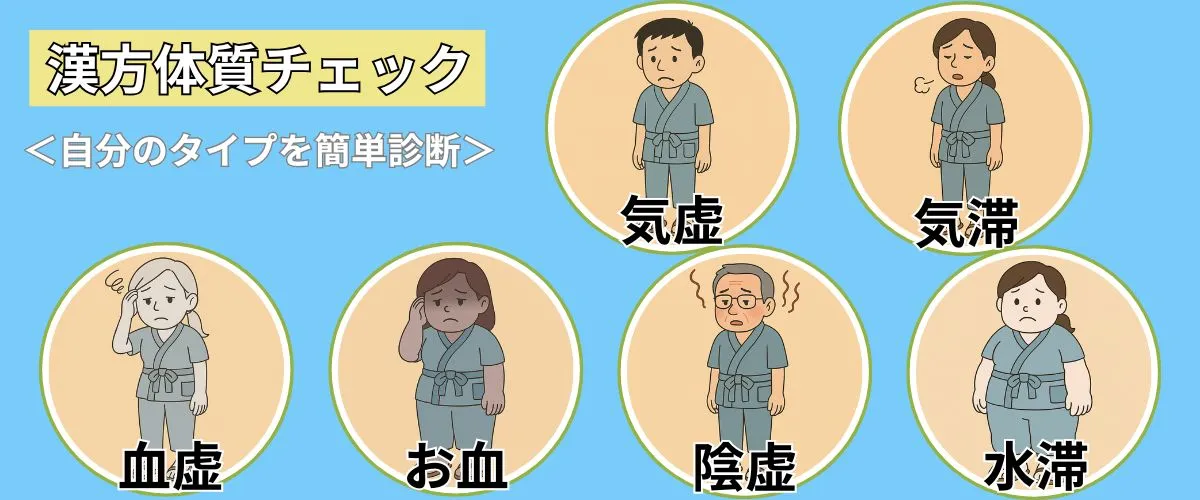
Constitutional Tendencies
Traditional East Asian medicine identifies a number of constitutional patterns that shape how the body functions in health and how it responds when illness arises. The most fundamental include:
Ki Deficiency (気虚, kikyo) — Insufficient vital energy. Presents as fatigue, cold sensitivity, low motivation, and a preference for stillness over movement.
Ki Stagnation (気滞, kitai) — Vital energy is present but obstructed. Presents as irritability, emotional volatility, and muscular tension, particularly in the shoulders and neck.
Blood Deficiency (血虚, kekkyo) — Insufficient nourishing substance. Presents as hair thinning or loss, pallor, brittle nails with grayish discoloration, and dryness of skin and tissues.
Blood Stagnation (瘀血, oketsu) — Obstruction at a deeper, more substantial level than Ki Stagnation. Presents as fixed, sharp pain — severe menstrual pain, for example — and may include darker tissue coloration and palpable masses.
Yin Deficiency (陰虚, inkyo) — Insufficient cooling, moistening substance. Common in the aging body. Presents as night sweats, hot flashes, dryness, and a gradual decline of the muscles and bones that Yin nourishes and supports.
Dampness and Fluid Stagnation (水湿, suishitsu) — Excess fluids accumulating in the tissues. Presents as a feeling of heaviness in the body, swelling that makes rings feel tight on the fingers, and joint pain that worsens on rainy or humid days.
These constitutional patterns are integral to clinical assessment in East Asian medicine. The same symptom can arise from multiple underlying patterns, and effective treatment requires identifying which pattern is at work.